In short
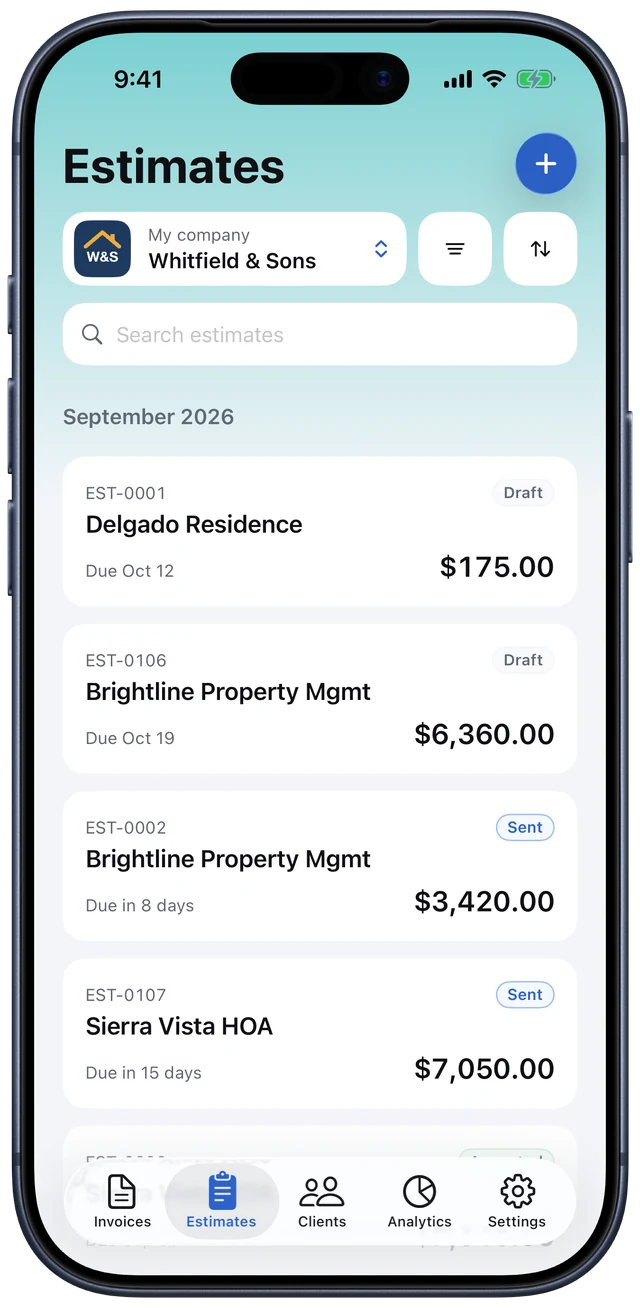
Invocket lets painting businesses write estimates on site, turn accepted ones into invoices, mark them paid and see who still owes what, all on the iPhone and without signal. Estimate with AI drafts the line items from a description.
On this page
What a painting job bills like
These are the lines a painting estimate usually carries. In Invocket each one is a line item with a quantity and a price, and you can group them into sections with their own subtotals:
- Prep & masking, per room
- Interior paint, two coats
- Exterior, per square foot
- Paint & materials
How painting jobs are priced and paid
Choose a unit you can measure and define. A room price fits a standard repaint when size, condition, ceiling height, and included trim are clear. Floor square footage helps compare similar rooms, but differs from paintable surface area. Measure walls and ceilings when layouts vary. Use linear feet for baseboards or casing; price cabinets by door, drawer, or cabinet set when that scope is clear. Use time and materials or an allowance for uncertain repairs. State exactly what each measure includes and how many coats are covered.
Separate the work so the customer can see what drives the total. Typical estimate lines include:
| Line item | Priced by | What to write on the estimate |
|---|---|---|
| Protection and masking | Room or job | Floors, furniture, fixtures, areas protected |
| Surface preparation | Room, surface, or labor allowance | Cleaning, scraping, sanding, caulking, included patching |
| Primer | Surface area or gallons | Where primer is needed and product |
| Walls and ceilings | Paintable area or room | Surface, color, sheen, product, coat count |
| Trim, doors, cabinets | Linear feet or each | Parts included, finish, coat count |
| Repairs or specialty finish | Each, area, or time | Repair limit, steps, allowance |
| Cleanup | Job | Daily cleanup and included removal |
For exterior bids, name each elevation, siding, and access setup. Indoors, list walls, ceilings, and trim, with coats, product, finish, protection, and minor patching. Note condition and repairs needing approval. A residential agreement can call for a deposit before ordering paint, a progress bill when named rooms or elevations are complete, and the balance after touch-ups and walkthrough. Tie bills to finished work, not elapsed time. For commercial customers, confirm invoice recipient, required backup, milestones, and terms before starting. Record approved extras separately.
The documents a painting job produces


What makes billing painting work harder
Prep changes after scraping
Scraping can expose failing layers, soft wood, or cracked plaster not seen at the walk-through. Photograph the area and describe added work, price basis, and schedule effect in a change order. Get approval before proceeding and attach the signed change to the invoice, separate from the original room price.
Paint quantity and coat count
A strong color change or porous patches can require more paint or coats than a simple repaint. Sherwin-Williams says a gallon typically covers about 350 to 400 square feet per coat. Treat coverage as a planning reference, not a promise. State measured area, product, included coats, and how added coats are priced. If conditions change, show the customer the surface and obtain written approval before applying extra coats, then bill that approved work separately from the original scope.
Occupied rooms and access
Furniture, tenants, business hours, and room access may force split visits or leave a surface waiting. That can delay completion and a progress bill even when other rooms are done. List rooms, access assumptions, and who moves belongings. Tie billing to completed milestones in the agreement, and keep dated notes of blocked areas and revised work dates. This gives you a record if the customer asks why the schedule or invoice date moved during the job.
Dispute: The finish looks uneven
Customers may flag flashing, lap marks, patches, or missed cut lines after paint dries. Record approved color, sheen, product, surface condition, coat count, and existing defects before work. At the walkthrough, list each touch-up location and agreed return visit. Compare the complaint with the written scope, complete agreed corrections, and note them before closing the invoice. Dated photos and the signed walkthrough record help keep a finish disagreement focused on specific surfaces and agreed work.
Dispute: Extra prep was not approved
A customer may reject charges for scraping, patching, or another coat absent from the estimate. Before proceeding, show the condition and send a change order describing the task, price basis, and schedule effect. Keep written approval. If approval was missed, do not rewrite the scope afterward. Share dated photos and notes, discuss the disputed line separately, and record any resolution in writing. Clear approval before the work is the strongest way to avoid an unexpected charge at billing.
Plan exterior painting around weather and access
Interior repainting can continue year-round, while exterior work depends on dry surfaces and conditions allowed by the paint product. Rain or unsuitable temperatures can interrupt a coat, delay return visits, and move the walkthrough and invoice. Put weather delays and rescheduling expectations in the agreement, and keep interior estimates moving during slower exterior periods. Before disturbing paint in older homes, check whether lead-safe requirements apply. The US EPA’s RRP Rule covers certain renovation work in pre-1978 homes and child-occupied facilities; check EPA guidance and state rules for applicability.
Painting invoicing FAQs
How do painters price an interior repaint?
Price by room when surfaces and prep are comparable. For irregular layouts, measure paintable wall and ceiling area; price trim by linear foot or item. Break out repairs, protection, products, and coats so included work and approval-required extras are clear to the customer.
Should I charge painting by square foot or by room?
Room rates fit repeatable spaces with similar height, condition, and scope. Floor area compares similar rooms; paintable surface area suits varied layouts. State whether walls, ceilings, trim, doors, and closets are included, plus how unusual height affects the measure. Price coats, product, and prep separately when those vary between rooms.
What should a painting deposit cover?
If your agreement calls for a deposit, say whether it applies to the job total and what materials or scheduled work it supports. Record payment as a credit on later invoices. Deposit requirements vary, so check your state and local rules before setting terms.
How do I bill for extra painting prep?
Pause before work outside the estimate. Photograph the condition, describe scraping, patching, sanding, or added coats, and state price basis and schedule effect. Get written approval, then list the change separately on an invoice rather than folding it into the original charge.
When should I send a progress painting invoice?
Use milestones in the agreement, such as named rooms or elevations complete. Identify finished work, approved changes, payments received, and balance. For commercial jobs, confirm invoice recipient, required backup, format, and payment terms before starting so billing follows the customer’s process.
Does Invocket work for painting businesses of one?
Yes, it is built for them. There is no seat pricing, no crew scheduling and no account to create; the app opens straight into an empty ledger on your iPhone.
Can I send a painting estimate and turn it into an invoice?
Yes. Estimates have their own numbering. When the customer accepts, mark the estimate Accepted and convert it: a new invoice opens with the client, line items, sections, VAT and payment details already filled in, and you save it.
Does it work without a signal?
Yes. Documents are written to the phone, so creating, editing, rendering the PDF and marking an invoice paid all work with no connection. You need a signal to email the file and to use Estimate with AI.

About this page
Invocket Editorial
Written by the team that builds Invocket, an invoicing app for contractors. We check prices and rules against published sources, name them on the page, and update the page when they change. How we write and check these pages.
Keep going
Template
Painting invoice template
Fill it in on the site or download it.
Template
Painting estimate template
Line items, deposit and expiry date laid out.
Free tool
Invoice generator
Make a PDF invoice in the browser.
Free tool
Job profit & margin calculator
See what the job leaves you after costs.
Free tool
Markup calculator
Free tool
Labor cost calculator
In the app
Estimate with AI
Academy
Estimates that win the job
Price the job first