
In short
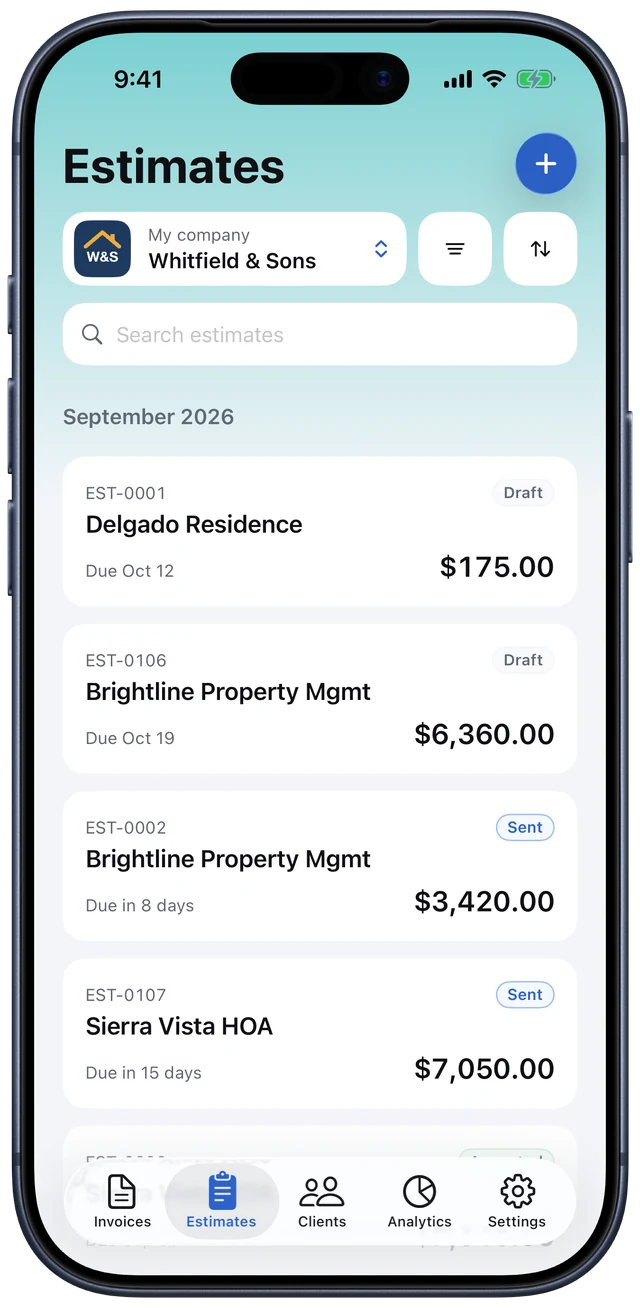
Invocket lets carpentry businesses write estimates on site, turn accepted ones into invoices, mark them paid and see who still owes what, all on the iPhone and without signal. Estimate with AI drafts the line items from a description.
On this page
What a carpentry job bills like
These are the lines a carpentry estimate usually carries. In Invocket each one is a line item with a quantity and a price, and you can group them into sections with their own subtotals:
- Labor, per hour
- Trim, per linear foot
- Door hang, each
- Lumber & fasteners
How carpentry jobs are priced and paid
Match the price basis to what you can measure. Hourly billing fits repairs and concealed conditions; state the rate, minimum visit, and material terms. A fixed price fits a defined scope with known dimensions and finish choices. Trim can be priced by linear foot when profile and corners are counted; doors by opening when hanging and hardware are clear. Framing may be a fixed phase, with labor and material split out.
Identify each room, elevation, quantity, material grade or profile, finish, and exclusion. List delivery, removal, hardware, protection, and patching when they apply. If materials are cost plus markup, state the basis before ordering. Keep receipts and the cut list with the job file when field dimensions change the order.
| Line item | Priced by | What to write on the estimate |
|---|---|---|
| Framing labor | Fixed phase or hours | Area, members, layout, fastening included |
| Lumber and sheet goods | Quantity, cost, or allowance | Grade, dimensions, count, delivery, markup basis |
| Baseboard or casing | Linear foot | Profile, length, corners, returns, finish |
| Interior door hanging | Per opening | Door, jamb, hardware, shimming, casing |
| Cabinet or built-in install | Unit, run, or fixed scope | Units, scribe work, fastening, supplied-by |
| Repair or punch work | Hourly or fixed task | Location, labor, minimum, material handling |
| Demolition and haul-off | Fixed scope or load | Items, protection, disposal, exclusions |
A common schedule is a deposit before ordering special lumber, doors, or cabinets, a progress invoice at a named framing or installation stage, and a final invoice after agreed punch-list work. Tie payments to completed scope. For commercial customers, confirm the billing cutoff, backup, approval path, and terms before mobilizing; send receipts, field tickets, or signed changes as requested. Price and approve added work in writing before proceeding, then bill it with the next agreed draw.
The documents a carpentry job produces


What makes billing carpentry work harder
Material takeoffs meet real framing
Field cuts, damaged stock, blocking, and revised openings can change a takeoff made from plans. Keep supplier receipts and note where added stock went instead of folding purchases into one lumber line. Separate material from labor and state whether the customer pays supplier cost or an agreed markup. If a substitution changes grade, size, or finish, record approval before ordering so the invoice matches installed material.
Finish details hide labor
A linear-foot trim rate is clear on a straight wall but less so around returns, corners, stair angles, or uneven walls. Door work can grow when jambs are out of plumb or casing meets old plaster. Define what each unit includes: cuts, joints, shimming, hardware, caulk, and paint or stain. Photograph unusual conditions before covering them and get approval for work outside the estimate.
Several price bases share one job
A remodel may combine a fixed built-in, hourly repair, per-opening doors, and trim by the foot. A lump sum is hard to reconcile when one area is delayed or a finish changes. Give each scope its own line, quantity or unit, rate, and completion point. Keep estimates, revisions, delivery slips, and progress invoices together so a GC or property manager can match billed work to a project draw.
Dispute: Added work was not approved
A customer may treat concealed rot repair or reframing as part of the original price. Name exclusions and likely hidden conditions in the estimate. Pause to send a change order with location, photos, labor, materials, price, and schedule effect; get written approval before continuing when practical. If challenged later, show the original scope beside dated approval and the work record, rather than adding an unexplained charge.
Dispute: The finish or fit is not accepted
A customer may hold final payment over a rubbing door, uneven reveals, trim gaps, or an unexpected finish. Record door swing, hardware, trim profile, finish responsibility, and acceptance points in the estimate; photograph existing conditions. At walkthrough, list each punch item and completion status. Invoice agreed scope clearly, separate disputed items, and retain dated photos and customer sign-off with final paperwork.
How weather and project schedules affect carpentry cash flow
Exterior framing can pause in wet, cold, or windy conditions, while interior trim, doors, and built-ins may continue if the site is ready. Remodel work depends on other trades finishing rough-ins, drywall, or flooring. Put weather delays, site access, material lead time, and payment milestones in the scope. If a GC draw slips or a room is not ready, document completed work and stored materials, then confirm a revised start and billing date in writing.
Carpentry invoicing FAQs
How do I write an estimate for a carpentry job?
Break work into locations and tasks, then show quantity and price basis: hours, linear feet, openings, units, or fixed scope. List material grade or finish, who supplies it, exclusions, disposal, and payment points. Describe how hidden conditions or changed selections will be approved and priced.
Should I charge carpentry by the hour or by the job?
Use hourly pricing when a repair’s condition or scope is hard to inspect before opening it. Fixed pricing suits confirmed dimensions, materials, and finish choices. A unit price works for repeatable trim or doors when you define included cuts, fitting, hardware, and cleanup.
How much deposit should I ask for on a carpentry job?
Set a deposit against the agreed initial commitment, such as special-order doors or lumber, and write what it covers. State when the remainder is due. Check your state and local rules for any limits or required contract language, and avoid requesting payment for undescribed work.
How should I bill for a carpentry change order?
Describe the added location and task, why it is outside the estimate, labor and material basis, price, and schedule effect. Include a photo, measurement, or supplier quote when useful. Get written approval from the customer or authorized GC contact before proceeding, then list the approved change on an invoice.
What paperwork should I send with a carpentry progress invoice?
Reference the estimate or schedule, completed framing or installation milestone, prior payments, and approved changes. Attach receipts, delivery slips, field tickets, or photos if required. For work covered by EPA’s RRP Rule, follow its certification, lead-safe work, and Renovate Right pamphlet requirements; check state and local rules.
Does Invocket work for carpentry businesses of one?
Yes, it is built for them. There is no seat pricing, no crew scheduling and no account to create; the app opens straight into an empty ledger on your iPhone.
Can I send a carpentry estimate and turn it into an invoice?
Yes. Estimates have their own numbering. When the customer accepts, mark the estimate Accepted and convert it: a new invoice opens with the client, line items, sections, VAT and payment details already filled in, and you save it.
Does it work without a signal?
Yes. Documents are written to the phone, so creating, editing, rendering the PDF and marking an invoice paid all work with no connection. You need a signal to email the file and to use Estimate with AI.

About this page
Invocket Editorial
Written by the team that builds Invocket, an invoicing app for contractors. We check prices and rules against published sources, name them on the page, and update the page when they change. How we write and check these pages.
Keep going
Template
Carpentry invoice template
Fill it in on the site or download it.
Template
Carpentry estimate template
Line items, deposit and expiry date laid out.
Free tool
Invoice generator
Make a PDF invoice in the browser.
Free tool
Job profit & margin calculator
See what the job leaves you after costs.
Free tool
Markup calculator
Free tool
Labor cost calculator
In the app
Estimate with AI
Academy
Estimates that win the job