In short
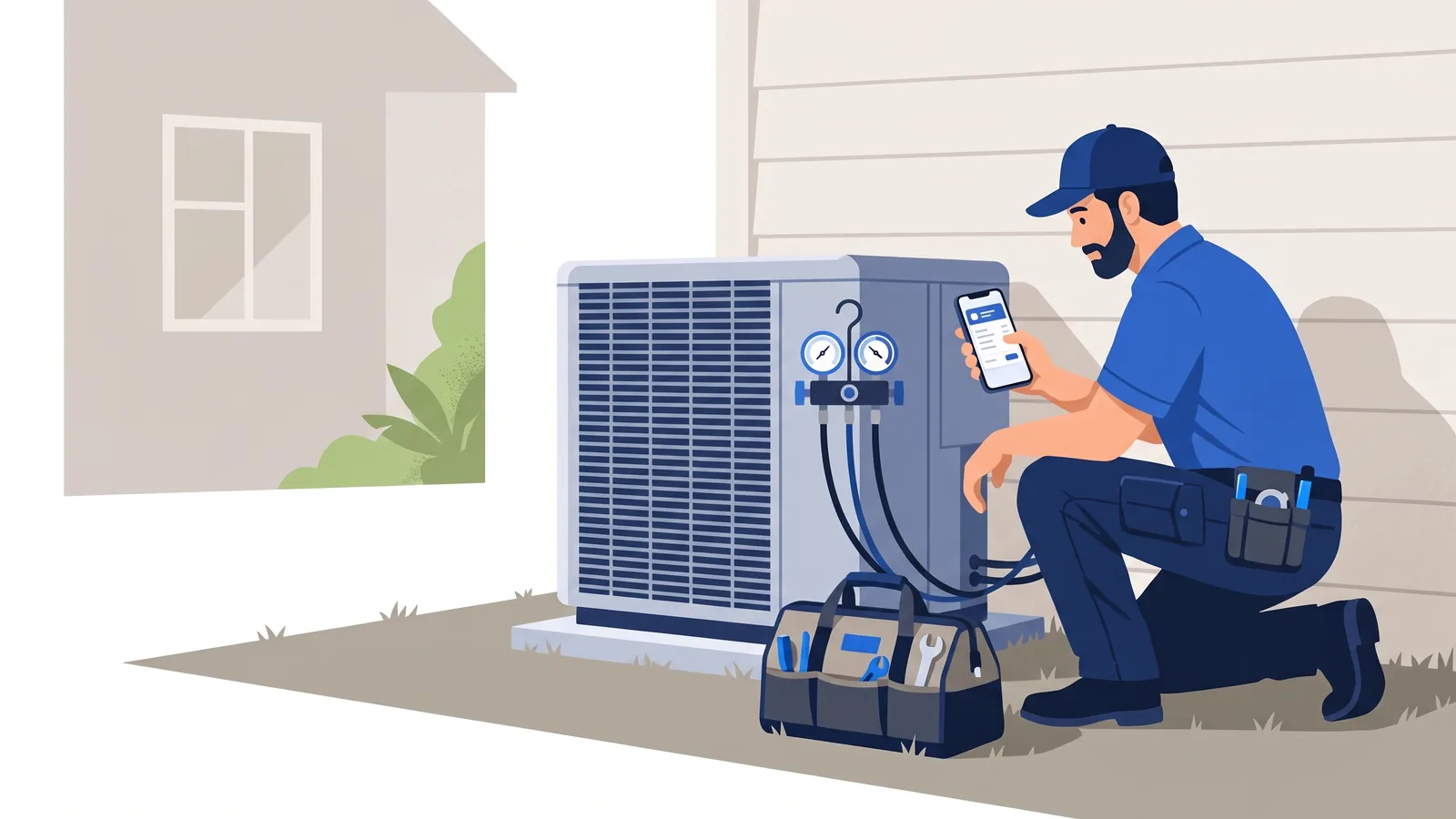
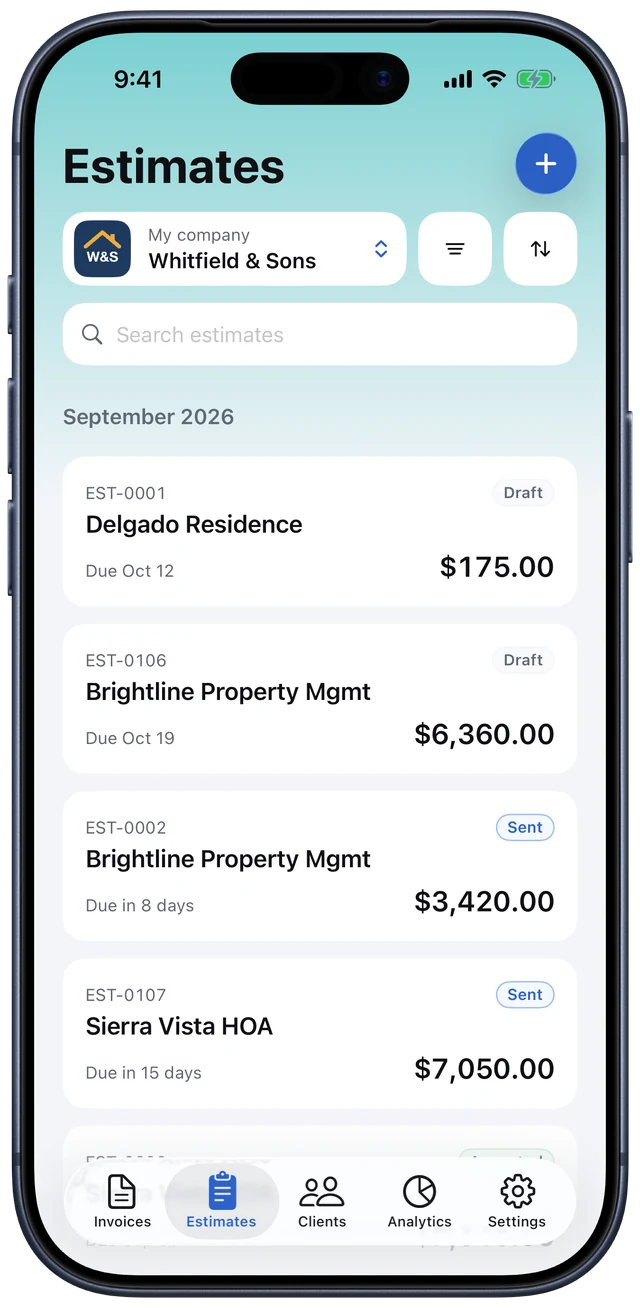
Invocket lets HVAC businesses write estimates on site, turn accepted ones into invoices, mark them paid and see who still owes what, all on the iPhone and without signal. Estimate with AI drafts the line items from a description.
On this page
What a HVAC job bills like
These are the lines a HVAC estimate usually carries. In Invocket each one is a line item with a quantity and a price, and you can group them into sections with their own subtotals:
- Service call & diagnostic
- Refrigerant, per pound
- Condenser replacement
- Maintenance agreement, per visit
How HVAC jobs are priced and paid
Use a diagnostic or trip charge for a service visit, then quote repair labor and parts after testing. Flat-rate pricing fits a defined repair; time-and-materials fits uncertain troubleshooting. State the labor rate, minimum charge, parts basis, and approval limit before work. Refrigerant is commonly priced per pound, equipment per system, and defined replacement work as a project price. Maintenance may be priced per system or under an agreement for specified visits.
Separate charges so the customer can compare the estimate with the final bill. A HVAC estimate template should leave room for model details and exclusions.
| Line item | Priced by | What to write on the estimate |
|---|---|---|
| Diagnostic or trip | Per visit | Complaint, testing, and whether repair is extra |
| Repair labor | Flat rate or hours | Fault, task, rate, and return visit terms |
| Parts | Each, kit, or allowance | Description, quantity, substitutions |
| Refrigerant | Per pound | Type, estimated and actual quantity |
| Equipment | Per system or project | Model, included labor, disposal, exclusions |
| Duct or line set | Per foot or project | Length, access assumptions, materials |
| Startup and testing | Per system or included | Tests, records, customer handoff |
For a replacement, collect a deposit after signed approval and before ordering. If needed, bill progress at a stated delivery or installation milestone; make the final balance due after installation and startup. Write each trigger and amount into the proposal. For commercial customers, confirm the purchase order, billing contact, invoice route, required backup, and payment terms before scheduling. Check your state and local rules for deposit limits and contract wording. Match supplier bills to deposits if equipment or installation is delayed.
The documents a HVAC job produces


What makes billing HVAC work harder
Diagnosis changes the scope
A no-cooling call may begin as a thermostat complaint and reveal a failed capacitor, motor, leak, or airflow restriction. Keep the diagnostic fee separate from repair labor. Record the finding and price added work before doing it. If the customer declines, bill only the authorized visit and completed work. Written approval connects the initial symptom to the final charge and gives you a record if the customer later questions what was agreed.
Parts and refrigerant need detail
A replacement depends on matching equipment, controls, electrical setup, refrigerant circuit, and site conditions. Identify the quoted model or agreed equivalent, and state whether duct, line-set, drain, electrical, and disposal work is included. For refrigerant, record type and quantity actually added. US EPA’s Section 608 Technician Certification program requires certification for technicians who maintain, service, repair or dispose of equipment that could release refrigerant.
A job leaves records across visits
A repair may need diagnosis, a parts-order return, and final testing; replacement adds delivery, installation, startup, and handoff records. Date each visit and connect labor, parts, readings, and photos to one job. Note backorders and who will reschedule. That trail explains multiple visits and lets you compare technician notes with the invoice instead of relying on memory when billing is finished days later.
Dispute: Customer questions the diagnostic fee
Put the diagnostic or trip charge and what it covers in the authorization before dispatch. Record the complaint, tests, finding, and whether repair was offered or declined. Keep the fee separate from repair labor; describe any repair credit only if agreed in writing. If challenged, send the authorization and visit notes, then correct the invoice if the records do not support the fee.
Dispute: Final bill exceeds the estimate
A condition may require extra work after equipment is opened, but the estimate does not approve every addition. Write a change order with the finding, revised scope, price or rate, and schedule effect; get approval before continuing. Attach it to the final invoice and show original amount, additions, payments, and balance. If approval is missing, resolve the charge from the signed scope and job records.
Plan billing around heating and cooling seasons
Hot weather can bunch up no-cooling calls, while cold snaps bring no-heat repairs. The rush can push estimates, parts follow-ups, and invoicing behind dispatch. Set time to close each call while readings and approvals are fresh. Spring and fall may suit planned tune-ups and system proposals, depending on local demand. Maintenance agreements add scheduled work between breakdowns; record each visit and bill on the dates the agreement specifies.
HVAC invoicing FAQs
How do I quote an HVAC repair before finding the cause?
Quote the diagnostic visit first and state what testing it includes. Explain that repair is separate and priced after diagnosis. If you set an approval limit for minor repairs, record its amount and scope, and get approval before going beyond it.
Should HVAC labor be hourly or flat rate?
Use flat rate for a defined repair with clear inclusions. Time-and-materials can fit uncertain troubleshooting; state the labor rate, minimum, parts basis, and approval point. Keep the diagnostic fee separate so the visit charge is clear even if the customer declines repair.
What goes on an HVAC replacement deposit invoice?
Tie the deposit to the signed proposal and identify the equipment or project. Show the amount received, contract balance, and next payment milestone. State when equipment will be ordered. Check your state and local rules for deposit limits and contract requirements.
How should I bill refrigerant on an HVAC invoice?
List refrigerant type, quantity added, unit, and price basis, with leak testing or repair shown separately. Record actual quantity after service, not just the estimate. Keep technician notes with the invoice to connect the billed material to the work.
What paperwork goes to a customer after HVAC installation?
Send an itemized final invoice with approved scope, change orders, deposit credit, and balance. Include equipment model and serial details, startup results, and warranty or maintenance papers supplied for the job. Commercial invoices may also need a purchase order reference and completion backup.
Does Invocket work for HVAC businesses of one?
Yes, it is built for them. There is no seat pricing, no crew scheduling and no account to create; the app opens straight into an empty ledger on your iPhone.
Can I send a HVAC estimate and turn it into an invoice?
Yes. Estimates have their own numbering. When the customer accepts, mark the estimate Accepted and convert it: a new invoice opens with the client, line items, sections, VAT and payment details already filled in, and you save it.
Does it work without a signal?
Yes. Documents are written to the phone, so creating, editing, rendering the PDF and marking an invoice paid all work with no connection. You need a signal to email the file and to use Estimate with AI.

About this page
Invocket Editorial
Written by the team that builds Invocket, an invoicing app for contractors. We check prices and rules against published sources, name them on the page, and update the page when they change. How we write and check these pages.
Keep going
Template
HVAC invoice template
Fill it in on the site or download it.
Template
HVAC estimate template
Line items, deposit and expiry date laid out.
Free tool
Invoice generator
Make a PDF invoice in the browser.
Free tool
Job profit & margin calculator
See what the job leaves you after costs.
Free tool
Markup calculator
Free tool
Labor cost calculator
In the app
Estimate with AI
Academy
Estimates that win the job