
In short
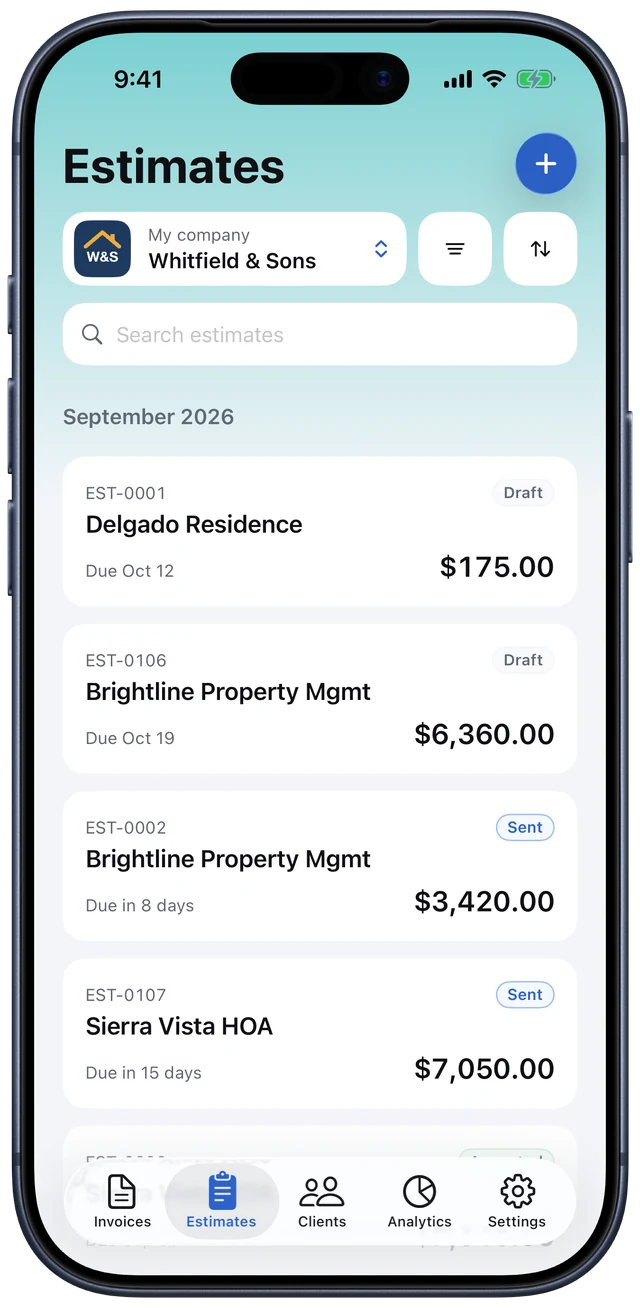
Invocket lets landscaping businesses write estimates on site, turn accepted ones into invoices, mark them paid and see who still owes what, all on the iPhone and without signal. Estimate with AI drafts the line items from a description.
On this page
What a landscaping job bills like
These are the lines a landscaping estimate usually carries. In Invocket each one is a line item with a quantity and a price, and you can group them into sections with their own subtotals:
- Mow & trim, per visit
- Mulch, per cubic yard
- Spring clean-up
- Seasonal contract, per month
How landscaping jobs are priced and paid
Choose a unit that matches how you measure and perform the work. Use a per-visit rate for repeat mowing with consistent tasks, or a monthly amount for a defined service period. Square feet fits sod or treatment, linear feet fits edging, and cubic yards fits mulch or soil. Price planting and cleanup by task, crew time, or scoped job when site conditions make units unreliable. Separate material, delivery, preparation, installation, and hauling when they apply.
List quantities and assumptions so the customer can see what changes if access, disposal, or material needs differ from the walk-through.
| Line item | Priced by | What to write on the estimate |
|---|---|---|
| Mowing | Visit or service period | Areas, frequency, included trimming |
| Edging | Linear feet or task | Border length, edge type, disposal |
| Mulch | Cubic yards plus labor | Quantity, delivery, bed prep, spreading |
| Planting | Each or installed bed | Plant list, sizes, counts, soil work |
| Sod or seed | Square feet | Measured area, ground prep, installation |
| Cleanup and hauling | Task, load, or crew time | Debris included, disposal, exclusions |
| Irrigation repair | Time and listed parts | Zones checked, repair scope, parts |
For a larger installation, identify what a deposit covers and when due; check your state and local rules. For phased work, bill after named phases, then send a final invoice showing approved work less prior payments. Recurring invoices should name visits or period covered and due date. Commercial customers may require a purchase order, site sign-off, portal submission, or contract terms, so confirm steps first. Keep the accepted scope, delivery tickets, installed quantities, and extra-work approval with the invoice.
The documents a landscaping job produces


What makes billing landscaping work harder
Site conditions change the scope
A walk-through can miss buried roots, compacted soil, poor drainage, or tight equipment access. Record what you inspected and assumptions about disposal, access, and soil. If conditions change after work starts, document them with notes or photos and price added work before proceeding. This gives both sides a written basis to compare the original scope with the extra labor or material required.
Material quantities and delivery
Mulch is measured by volume, plants by size and count, and sod by coverage. Delivery minimums and leftover material affect the bill. State estimated quantities and whether handling is included. Keep supplier tickets and note actual installed amounts, so the final invoice explains a difference from the estimate and separates material cost from installation labor.
Recurring work and seasonal add-ons
A mowing rate assumes repeatable tasks, but customers may expect edging, leaf removal, branch hauling, or bed work to be included. Name included tasks and seasonal exclusions in the agreement. Log completed, skipped, and rescheduled visits with the reason. This matches a monthly bill to service performed when weather moves the route or extra work is approved.
Dispute: Mulch amount or finished depth
Dispute: The customer says the bed used less mulch or has less depth than expected. Record dimensions, estimated volume, depth assumption, and old-mulch removal before work. Save delivery and disposal tickets, then note installed quantity and approved adjustments. If challenged, compare records with the agreed scope and correct the invoice only when they show a mismatch.
Dispute: Extra work was not authorized
Dispute: The customer says trimming, hauling, or cleanup was included in mowing. Prevent this with an agreement naming included tasks and separately priced extras. Keep dated visit notes and written approval. If challenged, send the scope and service record, explain each charge, and remove it if work was not authorized. Keep the correction or resolution in writing.
Plan billing around the growing season
In colder regions, cleanup and bed preparation may lead into mowing and planting, followed by leaf removal; winter can reduce visits. Warmer regions may have a longer mowing season, but rain and growth still shift schedules. State the service period and billing cadence rather than assuming equal visits each month. For installations, order materials against an approved scope and tie progress invoices to finished phases. Record weather delays and rescheduled work so the service log supports the bill.
Landscaping invoicing FAQs
How do I write a landscaping estimate?
Describe site areas, tasks, quantities, materials, delivery, disposal, and exclusions. Show recurring visits separately and state each line’s price basis. Add the schedule, payment milestones, and change approval process. Keep the scope specific enough to compare finished work with the estimate.
Should I charge by the hour or by the job?
Choose a unit you can measure and explain. Per visit suits repeat mowing; square feet, linear feet, or cubic yards suit area, length, or volume. A scoped job price fits mixed cleanup or planting. State assumptions and separate uncertain tasks from the base scope.
What should a landscaping deposit cover?
Tie the deposit to the project and identify materials or scheduled work it supports. State when due and how it will be credited. Check your state and local rules before calling it nonrefundable. Keep the accepted estimate and payment record for the final invoice.
How do I bill for added landscaping work?
Write a change order before starting. Name the added task, quantity or price basis, cost, and schedule effect, then get approval in a retained message or signed document. Add approved work as its own invoice line. Keep measurements, photos, or tickets that support the change.
What paperwork supports a landscaping invoice?
Keep the accepted estimate, deposit record, approved change orders, supplier tickets, visit or phase notes, and required sign-off. Refer to records on the invoice, list payments, balance, and due date. Follow purchase order and submission steps agreed with commercial customers.
Does Invocket work for landscaping businesses of one?
Yes, it is built for them. There is no seat pricing, no crew scheduling and no account to create; the app opens straight into an empty ledger on your iPhone.
Can I send a landscaping estimate and turn it into an invoice?
Yes. Estimates have their own numbering. When the customer accepts, mark the estimate Accepted and convert it: a new invoice opens with the client, line items, sections, VAT and payment details already filled in, and you save it.
Does it work without a signal?
Yes. Documents are written to the phone, so creating, editing, rendering the PDF and marking an invoice paid all work with no connection. You need a signal to email the file and to use Estimate with AI.

About this page
Invocket Editorial
Written by the team that builds Invocket, an invoicing app for contractors. We check prices and rules against published sources, name them on the page, and update the page when they change. How we write and check these pages.
Keep going
Template
Landscaping invoice template
Fill it in on the site or download it.
Template
Landscaping estimate template
Line items, deposit and expiry date laid out.
Free tool
Invoice generator
Make a PDF invoice in the browser.
Free tool
Job profit & margin calculator
See what the job leaves you after costs.
Free tool
Markup calculator
Free tool
Labor cost calculator
In the app
Estimate with AI
Academy
Estimates that win the job