
In short
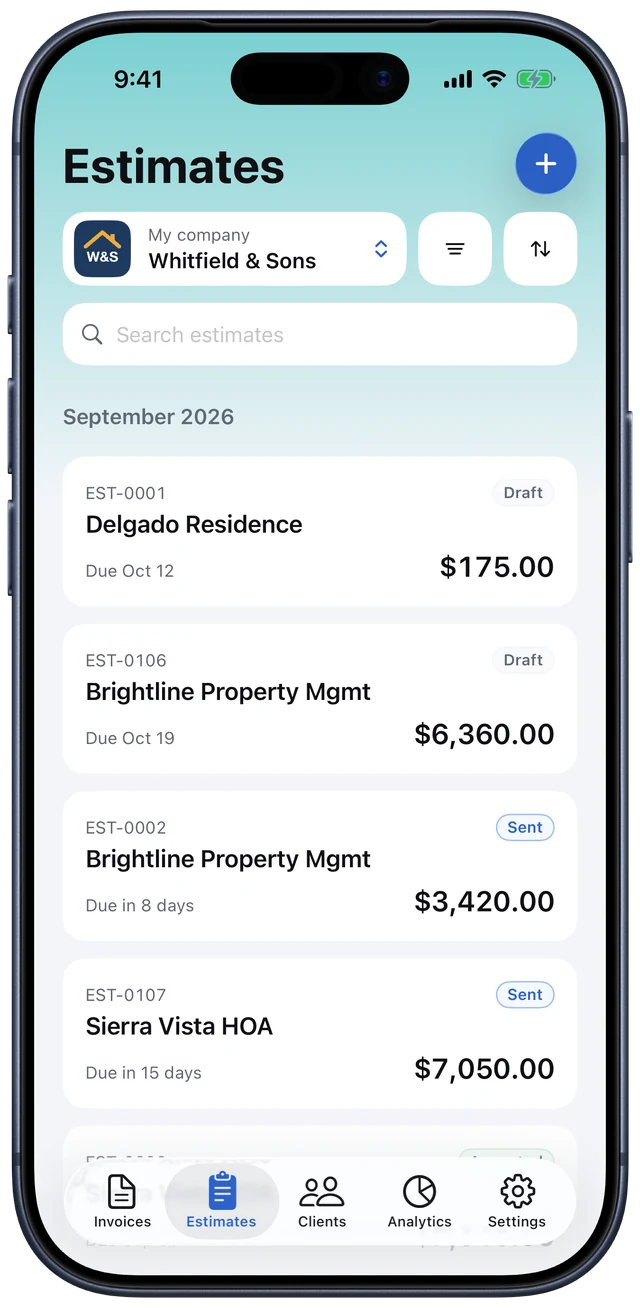
Invocket lets lawn care businesses write estimates on site, turn accepted ones into invoices, mark them paid and see who still owes what, all on the iPhone and without signal. Estimate with AI drafts the line items from a description.
On this page
What a lawn care job bills like
These are the lines a lawn care estimate usually carries. In Invocket each one is a line item with a quantity and a price, and you can group them into sections with their own subtotals:
- Mow, per visit
- Fertiliser round
- Aeration & overseed
- Seasonal contract
How lawn care jobs are priced and paid
Use a per-visit rate for recurring mowing when scope is stable. A seasonal rate fits a defined route and frequency; state the service window and weather rules. Price fertilizer, aeration, or overseeding by measured area when coverage drives material use. Hourly or fixed add-ons suit cleanup and overgrown first cuts when time is uncertain. Record areas, frequency, edging, access, and exclusions in the lawn care estimate.
| Line item | Priced by | What to write on the estimate |
|---|---|---|
| Routine mowing | Visit or season | Frequency, service window, trimming and blowing included |
| Edging and bed cleanup | Visit or bed | Edges and beds covered, debris handling |
| Overgrown first cut | Hour or fixed add-on | Starting condition and extra-work trigger |
| Fertilizer | Treated area or round | Area, service description, planned round |
| Aeration | Area or lawn section | Sections included, seed priced separately |
| Overseeding | Area or seed quantity | Preparation and watering responsibility |
| Leaf cleanup | Hour, visit, or load | Areas covered and haul-away scope |
A deposit can cover materials or reserved crew time if the agreement states when it is due and how it is credited. For residential visits, say if payment is due after each cut or on a monthly date. Set progress invoices around completed treatment rounds or named milestones, then bill the balance after listed work is done. Keep deposits distinct from earned progress charges. For commercial customers, specify the billing period, invoice submission process, required work records, approval contact, and payment terms. Show completed dates and approved additions, and subtract any deposit. Monthly mowing can use a recurring invoice, but match the billing period to completed service and weather terms. Commercial net terms vary by contract, so record the due date and any required backup on the invoice.
The documents a lawn care job produces


What makes billing lawn care work harder
Rain shifts visits
A wet week can delay the route while grass keeps growing. Log each scheduled date, actual service date, and whether the cut was rescheduled or skipped. Put weather and missed-visit terms in the agreement before the season. Invoice under those terms, not as if every calendar week produced a completed cut. Attach the route log if a manager questions the visit count. Record extra work and get approval before billing beyond scope.
The first cut may exceed routine scope
A new customer’s grass may be taller, rougher, or more obstructed than the estimate assumed. Extra passes, bagging, or hauling can make a routine rate unsuitable. Describe the baseline condition and overgrowth trigger in the quote. With permission, keep dated condition photos, then show approved extra work on its own invoice line. That gives both sides a record of why the initial visit differed from later mowing.
Treatment rounds need separate records
Fertilizer, aeration, and overseeding use different areas, materials, and dates from weekly mowing. Keep the estimate scope, work log, and invoice description aligned so a manager can approve the round. If pesticides are involved, US EPA’s Certification Standards for Pesticide Applicators says federal law requires anyone applying or supervising restricted-use pesticides to be certified under EPA rules and state law. Rules vary by state.
Dispute: A scheduled cut was missed
The disagreement often turns on rain, access, or skipped-visit terms. Prevent it by recording scheduled and completed dates, plus weather or access issues that stopped the crew. Send the dated service log with an invoice when a visit is questioned. Compare it with the agreement, correct any billing error, and explain the charge by pointing to the written reschedule or skip rule.
Dispute: An extra charge was not approved
An overgrown cut, added edging, haul-away, or extra treatment can look like an unexplained increase. Before starting, write down the added scope, price basis, and schedule effect, then get customer approval. Keep the added work separate from routine mowing on the invoice and attach the approval. If no approval exists, discuss the record and resolve the disputed line instead of carrying it into later service charges.
Plan invoices around the mowing season
Spring growth brings route starts, first cuts, fertilizer, aeration, and overseeding; summer often means repeat mowing and weather adjustments. In colder areas, mowing may pause in winter, while warmer areas may keep routes active longer. Quote a service window rather than assuming the same visits each month. Put treatment rounds and billing dates on the seasonal schedule, then document pauses and resumed work so invoices do not charge for services outside the agreed period.
Lawn care invoicing FAQs
How do I quote a lawn that is overgrown?
Inspect grass height, slope, obstacles, access, and debris before using your routine rate. State whether extra passes, bagging, or hauling are included. Quote the first cut separately if scope is uncertain, or write a price trigger for added work. Set the recurring visit price after the lawn returns to the agreed condition.
Should I price mowing by the hour or visit?
A per-visit or seasonal rate fits repeat mowing with stable scope. Hourly pricing can fit cleanup or an unusual first cut with uncertain time. Measured area can suit fertilizer, aeration, and seeding, where coverage drives work. Name the unit in the estimate and state which tasks it includes.
Should lawn care customers pay a deposit?
For seasonal work requiring materials or reserved crew time, state any deposit amount and due date in the agreement, along with how it will be credited. Show the credit on a later invoice. For routine mowing, write whether payment is due per visit or on a monthly billing date.
How do I bill extra lawn work after approval?
Write a change order before work outside the approved scope begins. Name the added service or area, pricing basis, schedule effect, and customer approval. Invoice that work separately and refer to the approval record. This distinguishes added cleanup or treatment from the regular mowing price.
What records go with a commercial lawn care invoice?
Ask the customer what their approval process requires. Identify the billing period and completed work dates, with separate lines for mowing, treatments, and approved additions. Include a service log or application record when requested, name the approval contact, and follow the submission and payment terms in the agreement.
Does Invocket work for lawn care businesses of one?
Yes, it is built for them. There is no seat pricing, no crew scheduling and no account to create; the app opens straight into an empty ledger on your iPhone.
Can I send a lawn care estimate and turn it into an invoice?
Yes. Estimates have their own numbering. When the customer accepts, mark the estimate Accepted and convert it: a new invoice opens with the client, line items, sections, VAT and payment details already filled in, and you save it.
Does it work without a signal?
Yes. Documents are written to the phone, so creating, editing, rendering the PDF and marking an invoice paid all work with no connection. You need a signal to email the file and to use Estimate with AI.

About this page
Invocket Editorial
Written by the team that builds Invocket, an invoicing app for contractors. We check prices and rules against published sources, name them on the page, and update the page when they change. How we write and check these pages.
Keep going
Template
Lawn care invoice template
Fill it in on the site or download it.
Template
Lawn care estimate template
Line items, deposit and expiry date laid out.
Free tool
Invoice generator
Make a PDF invoice in the browser.
Free tool
Job profit & margin calculator
See what the job leaves you after costs.
Free tool
Markup calculator
Free tool
Labor cost calculator
In the app
Estimate with AI
Academy
Estimates that win the job