In short
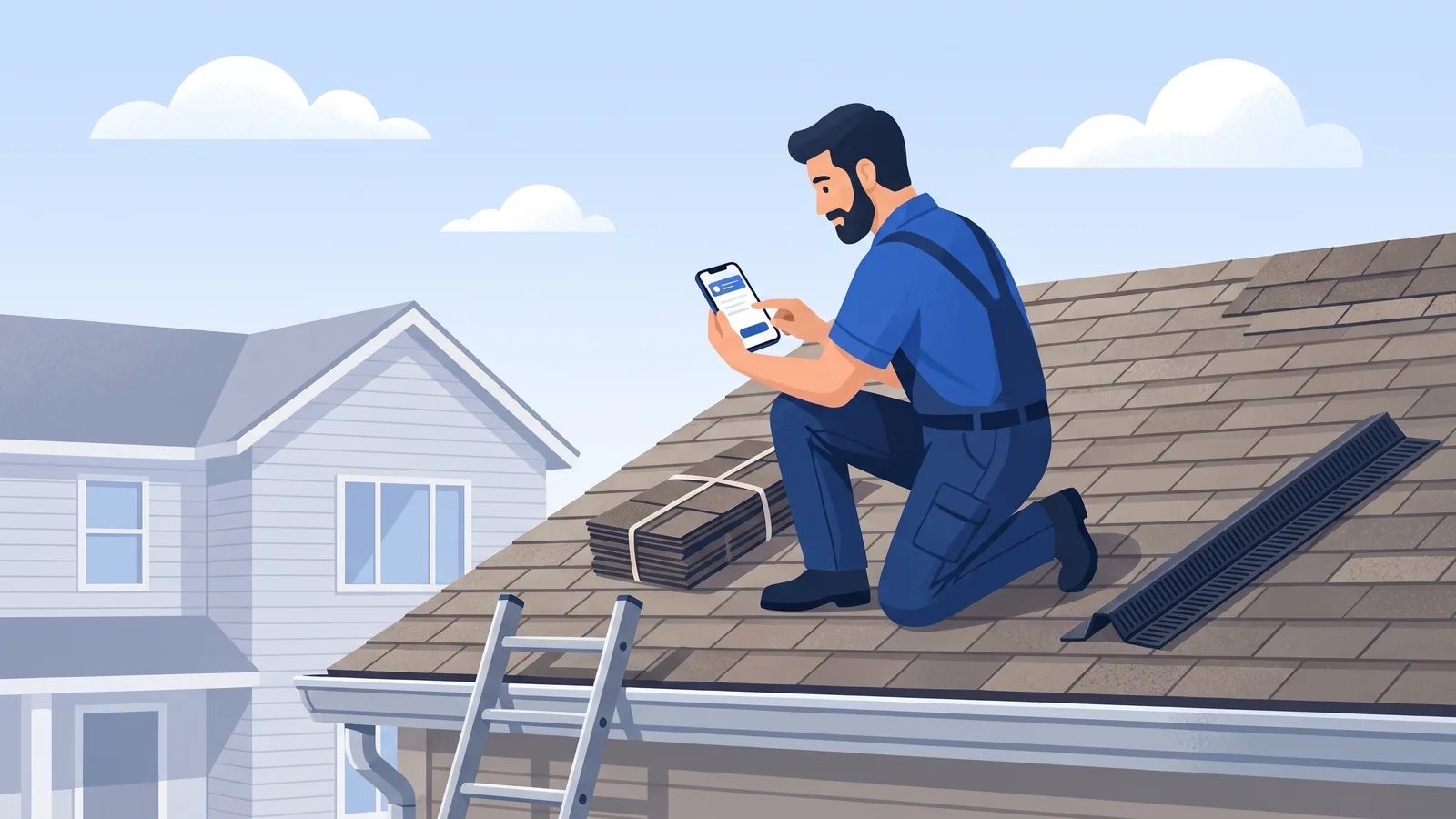
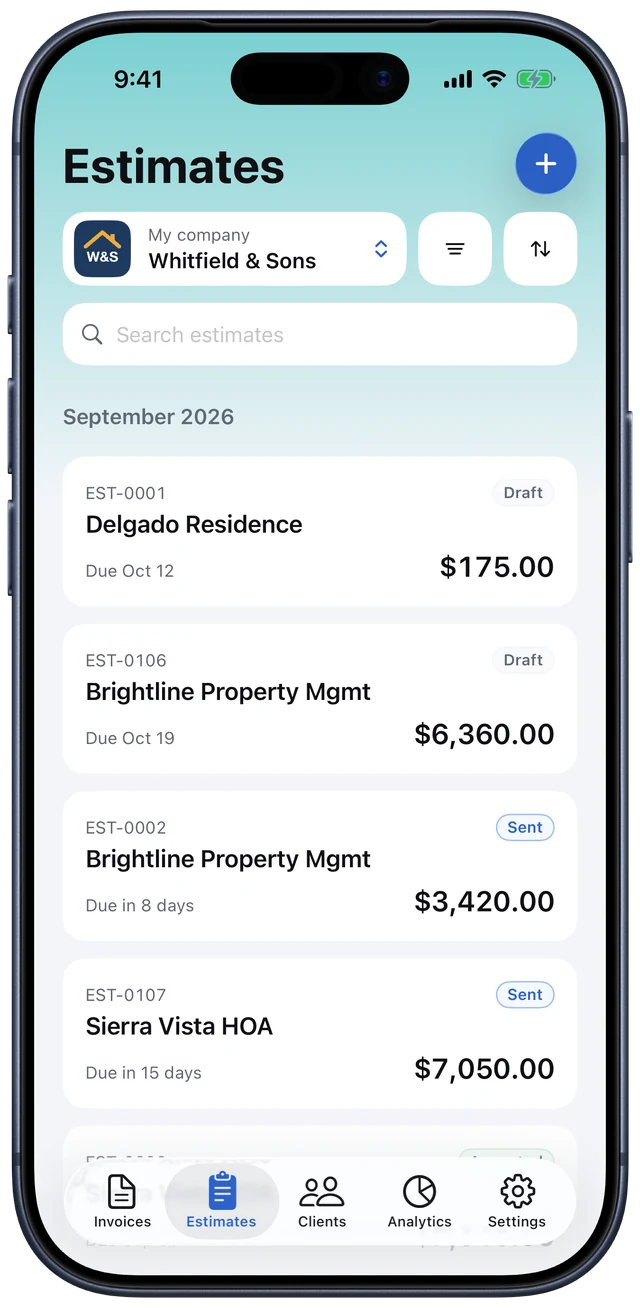
Invocket lets roofing businesses write estimates on site, turn accepted ones into invoices, mark them paid and see who still owes what, all on the iPhone and without signal. Estimate with AI drafts the line items from a description.
On this page
What a roofing job bills like
These are the lines a roofing estimate usually carries. In Invocket each one is a line item with a quantity and a price, and you can group them into sections with their own subtotals:
- Tear-off & disposal, per square
- Architectural shingles, per square
- Ridge vent, per linear foot
- Dump fee, per load
How roofing jobs are priced and paid
Price replacement work by measured roof area, pitch, layers to remove, access, and roofing system. A roofing square is 100 square feet of roof area, according to the Owens Corning roofing glossary. Per-square pricing fits measured installation or tear-off. Use linear feet for ridge, valleys, and flashing, naming each location and material. Price hidden decking per sheet or by allowance; small repairs may use labor or a defined unit.
List quantities, units, materials, and included work. Common estimate lines include:
| Line item | Priced by | What to write on the estimate |
|---|---|---|
| Shingle removal | Square | Layers, area, tear-off included |
| Haul-off and disposal | Load or job | Debris and disposal scope |
| Underlayment and shingles | Square | Product, color, area |
| Drip edge and flashing | Foot or each | Locations and replacement |
| Ridge cap or vent | Linear foot | Type, material, run |
| Decking replacement | Sheet or allowance | Unit charge and approval |
| Cleanup | Job | Ground cleanup and nail pickup |
Set payment milestones before starting. Tie a deposit to a stated material order, showing amount, due date, and credit against the balance. For larger work, bill progress at an agreed milestone such as tear-off or a defined section. Collect the final balance after agreed work and cleanup, including approved changes. For commercial or GC work, state billing cycle, backup, review process, and due date; confirm purchase order or schedule-of-values requirements. Check your state and local rules about deductibles and contract notices.
The documents a roofing job produces


What makes billing roofing work harder
Measuring slopes and waste
A footprint can miss pitch, dormers, valleys, and separate roof planes. These affect measured squares, cuts, and material orders; tear-off quantities can also differ when layers are present. Show measurement basis, roof sections, and layer count on the estimate. Keep overage distinct from installed area so the customer can see what was measured, ordered, and removed.
Hidden decking and repairs
Soft or broken decking may not show until shingles and underlayment come off. A fixed total can become disputed if added sheets were never approved. State a per-sheet method or allowance, photograph exposed damage, record location and quantity, and get written approval before replacement. If weather requires temporary protection, document that work and its authorization separately.
Insurance scope and deductible rules
A storm claim estimate may use different measurements, products, or repair assumptions from your proposal. Compare scope line by line and identify upgrades or omitted work rather than treating the insurer’s figure as your contract price. Keep the carrier estimate, measurements, photos, supplements, and signed scope together. Never offer to cover the deductible: in Texas, Business and Commerce Code section 27.02 makes it an offense to promise to pay, waive or rebate a policyholder’s deductible without the insurer’s consent, and Colorado has a similar rule for roofers (C.R.S. 6-22-105).
Dispute: leaks after replacement
A customer may connect a ceiling stain to roof work when its source is a chimney, siding joint, plumbing vent, or older flashing. Document existing stains and repair boundaries before work. Photograph flashing and penetrations during installation, note exclusions, and record final inspection. Respond in writing with findings and next steps; investigate the leak rather than dismissing it.
Dispute: cleanup or unfinished details
A customer may hold the final balance over yard nails, debris, or a ridge detail they believe is incomplete. Define cleanup and completion in the estimate, then photograph roof details and the ground sweep. Put remaining work on a written punch list with a visit date. Invoice completed scope and approved extras clearly, and document any disputed amount separately.
Weather changes the roofing schedule
Rain, snow, wind, and temperatures outside product guidance can interrupt tear-off or shingle work. Storms can bring clustered inspections and repairs while deliveries and crew dates shift. Write weather delays, temporary dry-in, and rescheduling steps into the scope, then record dates and added protection work. A deposit may arrive before a delayed start; progress billing and final payment follow completed milestones. Seasonal patterns depend on local climate and storm activity.
Roofing invoicing FAQs
How do I quote a roof replacement?
Measure each roof plane and note pitch and layers. Define removal, disposal, underlayment, roofing material, flashing, ridge work, and cleanup. List quantities and exclusions, plus a method for hidden decking. Put deposit, progress milestones, and final payment terms in the accepted scope.
Should I charge roofing by the square or by the hour?
Per-square pricing fits measured replacement or tear-off with defined scope. Linear feet suit ridge, valley, and flashing runs; per-sheet pricing can fit decking. Hourly or a defined repair charge may suit isolated repairs. State what each unit includes so the customer can follow the estimate.
What should a roofing deposit cover?
Tie the deposit to a stated purpose, such as materials ordered for the job. Show amount, due date, and credit against the contract balance, and keep the supplier order with the invoice. Deposit limits and contract terms vary, so check your state and local rules before setting terms.
How do I bill for decking found during tear-off?
Describe a decking unit or allowance in the estimate. When damage appears, photograph it, record location and quantity, then send a change order showing charge and schedule effect. Get written approval before added work. Follow the agreement for any immediate temporary protection and document it separately.
When is payment due on a roofing job?
Put due dates or milestones in the agreement. Residential work may use a material deposit, progress billing for a defined phase, and final balance after completion and cleanup. Commercial and GC jobs may require invoice backup and review steps; follow the written terms and check your state and local rules.
Does Invocket work for roofing businesses of one?
Yes, it is built for them. There is no seat pricing, no crew scheduling and no account to create; the app opens straight into an empty ledger on your iPhone.
Can I send a roofing estimate and turn it into an invoice?
Yes. Estimates have their own numbering. When the customer accepts, mark the estimate Accepted and convert it: a new invoice opens with the client, line items, sections, VAT and payment details already filled in, and you save it.
Does it work without a signal?
Yes. Documents are written to the phone, so creating, editing, rendering the PDF and marking an invoice paid all work with no connection. You need a signal to email the file and to use Estimate with AI.

About this page
Invocket Editorial
Written by the team that builds Invocket, an invoicing app for contractors. We check prices and rules against published sources, name them on the page, and update the page when they change. How we write and check these pages.
Keep going
Template
Roofing invoice template
Fill it in on the site or download it.
Template
Roofing estimate template
Line items, deposit and expiry date laid out.
Free tool
Invoice generator
Make a PDF invoice in the browser.
Free tool
Job profit & margin calculator
See what the job leaves you after costs.
Free tool
Markup calculator
Free tool
Labor cost calculator
In the app
Estimate with AI
Academy
Estimates that win the job
Price the job first