In short
Invocket lets electrical businesses write estimates on site, turn accepted ones into invoices, mark them paid and see who still owes what, all on the iPhone and without signal. Estimate with AI drafts the line items from a description.
On this page
What a electrical job bills like
These are the lines a electrical estimate usually carries. In Invocket each one is a line item with a quantity and a price, and you can group them into sections with their own subtotals:
- Service call & diagnostic
- Panel upgrade, 200A
- Outlet or switch, each
- Permit & inspection, pass-through
How electrical jobs are priced and paid
Use a trip or diagnostic charge for fault finding; state what it covers and price repairs separately. A fixed price fits defined tasks with known access. Time and materials suits troubleshooting or concealed conditions; record hours, parts, and approval. Bid larger rough-ins or tenant improvements from plans, using labor units or phase pricing. An electrician hourly rate guide can help check your labor calculation.
Separate labor, materials, equipment, permit charges, and exclusions. Common estimate lines include:
| Line item | Priced by | What to write on the estimate |
|---|---|---|
| Service call and diagnosis | Trip or diagnostic charge | Visit area, tests included, repair excluded unless listed |
| Panel replacement | Fixed scope or time and materials | Panel, breakers, labeling, and shutdown assumptions |
| Branch circuit | Per run, labor unit, or time and materials | Route, circuit scope, and finish access |
| Outlets and switches | Per device or grouped scope | Quantity, device type, locations, and plates |
| Lighting | Per fixture or package | Who supplies fixtures, mounting, wiring, controls |
| Permit coordination | Allowance or pass-through | Filing included; identify excluded authority charges |
| Patch and finish | Per opening or separate allowance | Who closes walls and restores the surface |
Set payment points in writing. A deposit can cover job-specific panels, breakers, wire, or fixtures. On a multi-phase job, bill progress at named milestones such as rough-in or equipment installation, then invoice the balance at the agreed closeout point. State due dates and accepted payment methods. Commercial customers may need a purchase order, specified invoice format, or approval before payment; confirm terms before scheduling. Code edition and permit process vary by place. The National Electrical Code (NFPA 70) applies where state or local government adopts it, and the local authority having jurisdiction handles permits and inspections. Check local rules and confirm who schedules inspection.
The documents a electrical job produces


What makes billing electrical work harder
Concealed conditions change the scope
An opening can expose damaged cable, missing grounding, or a route blocked by framing. The original price may not cover the repair. Photograph the condition and write what was hidden, the added work, and its labor and material basis. Get approval and record any schedule change before closing the wall or extending the work. Keep the added scope separate from the original estimate.
Parts and shutdowns tie up cash
Panelboards, breakers, service equipment, and fixtures may be ordered for one job, while a disconnect or utility coordination affects timing. A late delivery can leave a return visit unbilled. Name equipment, ordering assumptions, and the deposit or material billing point in the estimate. Save supplier invoices and record substitutions or backorders so the customer can see why the schedule or cost changed.
Inspection and closeout delay collection
Installation may be complete while inspection, corrections, reconnection, or customer sign-off remains pending. The final invoice can sit open with closeout work. Specify invoice milestones and who schedules access. Keep the permit, inspection result, correction list, and proof of corrections together. Do not describe an inspection as passed until the local authority records that result, and share any open item with the customer.
Dispute: The estimate included more
Broad wording such as ‘replace panel’ can lead a customer to expect a service upgrade, grounding, drywall repair, or utility coordination too. Prevent this by listing included tasks, equipment, known quantities, exclusions, and who handles adjacent trades. If challenged, compare the accepted estimate with dated site notes and approved changes. Explain the specific difference and revise the invoice only when the job paperwork supports it.
Dispute: Added labor or parts are questioned
Extra troubleshooting, a longer wire route, or a different breaker can be disputed when the reason and approval are missing. Before proceeding, write the condition, proposed fix, price basis, and schedule effect, then get approval. Keep photos, time records, parts documentation, and the signed change order. If questioned later, send an itemized explanation with those records and separate approved work from the disputed addition.
Electrical demand follows weather and building work
There is no single busy season for every electrical shop. Storms and outages bring urgent troubleshooting; heating and cooling changes, generator work, and renovations create regional peaks. Spring and summer can bring remodel rough-ins and panel work. Tie cash planning to milestones rather than assuming busy weeks pay quickly: emergency calls may close fast, while ordered equipment, inspections, or GC approval can delay collection. Check your state and local rules for permit timing and requirements.
Electrical invoicing FAQs
How do I quote an electrical service call?
State the trip or diagnostic charge and the testing it covers. Say if repair is included or priced after diagnosis. List labor, parts, and any return visit separately when approved, and record customer approval before starting work beyond diagnosis.
Should I price electrical work by hour or job?
Use a fixed price when devices, access, and tasks are defined. Time and materials can fit troubleshooting or concealed work with uncertain scope, if you explain the basis and record hours and parts. A trip charge may cover dispatch and initial diagnosis. Put the pricing method on the estimate.
Can I ask for a deposit on electrical work?
Propose a deposit for job-specific equipment or a scheduled phase, then credit it on later invoices. Put its purpose and cancellation terms in the agreement. Deposit limits and contract rules vary by state and locality, so check your state and local rules before setting terms.
How should I bill an electrical change order?
Write the discovered condition or requested change, added tasks, price basis, and schedule effect. Get written approval before doing extra work. List the change separately on the next invoice and include its approval date or reference so it matches the job record.
What paperwork should I keep for permitted electrical work?
Keep the accepted estimate, deposit receipt, permit record, approved changes, progress and final invoices, and inspection result. Add dated photos, equipment records, and panel notes when relevant. The local authority handles permits and inspections; the process varies by place, so confirm its requirements.
Does Invocket work for electrical businesses of one?
Yes, it is built for them. There is no seat pricing, no crew scheduling and no account to create; the app opens straight into an empty ledger on your iPhone.
Can I send a electrical estimate and turn it into an invoice?
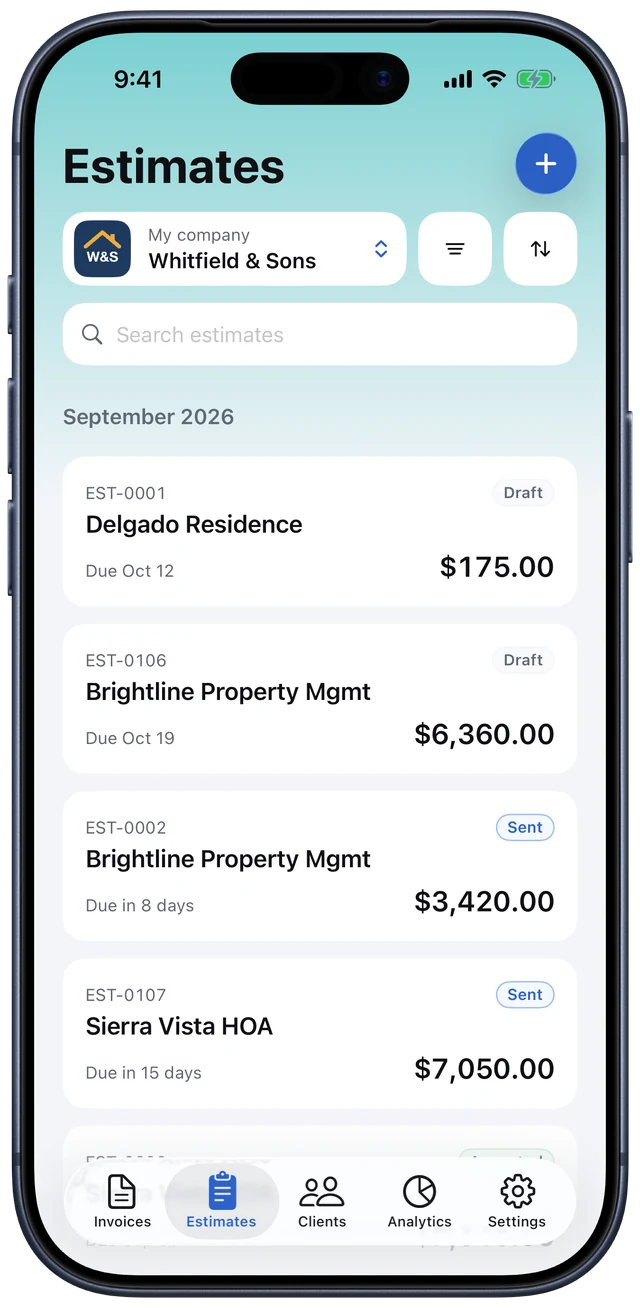
Yes. Estimates have their own numbering. When the customer accepts, mark the estimate Accepted and convert it: a new invoice opens with the client, line items, sections, VAT and payment details already filled in, and you save it.
Does it work without a signal?
Yes. Documents are written to the phone, so creating, editing, rendering the PDF and marking an invoice paid all work with no connection. You need a signal to email the file and to use Estimate with AI.

About this page
Invocket Editorial
Written by the team that builds Invocket, an invoicing app for contractors. We check prices and rules against published sources, name them on the page, and update the page when they change. How we write and check these pages.
Keep going
Template
Electrical invoice template
Fill it in on the site or download it.
Template
Electrical estimate template
Line items, deposit and expiry date laid out.
Free tool
Invoice generator
Make a PDF invoice in the browser.
Free tool
Job profit & margin calculator
See what the job leaves you after costs.
Free tool
Markup calculator
Free tool
Labor cost calculator
In the app
Estimate with AI
Academy
Estimates that win the job
Price the job first