In short
Invocket lets cleaning businesses write estimates on site, turn accepted ones into invoices, mark them paid and see who still owes what, all on the iPhone and without signal. Estimate with AI drafts the line items from a description.
On this page
What a cleaning job bills like
These are the lines a cleaning estimate usually carries. In Invocket each one is a line item with a quantity and a price, and you can group them into sections with their own subtotals:
- Standard clean, per sq ft
- Deep clean
- Move-out clean
- Recurring visit, per week
How cleaning jobs are priced and paid
Set the price against a scope you can describe. A flat rate per home or unit fits a standard clean when rooms and condition are clear. Square-foot pricing helps compare similar properties, but area alone misses grease, clutter, pet hair, and buildup. Hourly pricing fits first visits or uncertain conditions; name the crew size and approval step if time runs over. Per-room or per-task rates suit appliance interiors and windows. Recurring service is usually priced per visit, with frequency and tasks stated. See this house cleaning prices guide for factors to consider.
Separate the base clean from work that changes labor or supplies. Make each add-on visible so the customer can approve it before work starts.
| Line item | Priced by | What to write on the estimate |
|---|---|---|
| Standard clean | Home or visit | Rooms, tasks, frequency, exclusions |
| Deep clean | Home, room, or time | First-visit tasks and condition assumptions |
| Move-out clean | Unit or time | Cabinets, appliances, access, exclusions |
| Appliance interior | Each appliance | Which appliance and condition |
| Interior windows | Pane or window | Count, reachable side, tracks or screens |
| Heavy buildup | Labor time or task | Observed condition and approval needed |
| Special supplies or access | Trip or allowance | What triggers the charge |
For a one-time job, collect an agreed deposit before reserving substantial labor or buying special supplies, then invoice the balance at completion. For staged or post-construction work, state each progress stage and payment due on the estimate. Recurring homes may be billed per visit or weekly or monthly. Commercial customers may require a purchase order, service dates, an approval route, and invoice terms; confirm that process before starting. Credit deposits and prior payments on the final invoice, then issue a receipt.
The documents a cleaning job produces


What makes billing cleaning work harder
Area does not show condition
Homes of equal size can need different labor. Grease, soap scale, pet hair, or clutter may turn a standard clean into a deep clean. Describe the rooms, tasks, and condition assumed in the quote. If you cannot inspect first, state that a changed condition requires a revised scope and approval before extra work begins.
Turnovers bundle separate tasks
An empty unit may still need cabinet interiors, appliances, window tracks, and heavy bathroom buildup handled. List what is included and excluded, and identify who may approve add-ons if the manager is absent. A dated walkthrough record ties the accepted scope to the invoice when tenant, owner, and property manager each handle part of the turnover.
Access affects recurring visits
A missed entry or skipped visit can leave extra work for the next appointment. Record the access issue, skipped tasks, and requested catch-up work by date. State whether a missed visit is rescheduled or billed under the agreed terms. Do not include a one-time deep clean in the recurring rate unless the customer approves it in writing.
Dispute: A task was supposedly included
Vague terms such as “full clean” invite disagreement. Name rooms and surfaces, list appliance interiors and windows, and write exclusions on the estimate. Use a completion checklist tied to that scope. If the customer challenges the invoice, compare the accepted estimate, approved changes, and dated record; correct a missed agreed task or explain the documented extra.
Dispute: The result or extra charge is challenged
Record visible conditions and the agreed cleaning standard before work. If heavy soil changes the job, pause and get approval naming the added task and charge basis. Keep the visit checklist and response with the invoice. Address a quality complaint against the written scope, arrange an agreed correction when warranted, and separate it from approved extra work.
Turnovers and holiday cleans shape demand
Cleaning demand follows local moves, rental bookings, and household routines, not one national season. Lease turnover can bunch move-out jobs into certain weeks; deep cleans may rise before holidays or spring resets. Ask managers for access dates early and schedule turnovers apart from recurring routes. A delayed inspection or key handoff may delay invoice approval, so note the completion date and who accepted the work.
Cleaning invoicing FAQs
How do I quote a house I have not seen?
Ask for size, rooms, condition, pets, requested tasks, and photos of problem areas. Quote a defined scope with assumptions, not an unlimited clean. State that a different condition may change the quote, and get approval for a revised estimate before doing added work.
Should I charge by the hour or by the job?
A per-home or per-visit rate fits predictable scope and condition. Hourly billing can fit an initial clean, but state crew size, included time, and how extra time is approved. Per-task rates make appliance interiors and other add-ons clear rather than hiding them in the base clean.
Should I ask for a move-out cleaning deposit?
Set an agreed deposit with the reserved labor and special supplies in mind. Put its due date and credit against the final invoice in writing, and explain what happens if access changes. Check your state and local rules for any deposit requirements that apply.
How do I bill for extra cleaning found on arrival?
Pause before doing work outside the estimate. Describe the condition, added tasks, and charge basis in a written change order, then get approval from the authorized payer. Attach it to the estimate and list the extra separately on the invoice. Record what you completed if approval is declined.
What paperwork follows a recurring cleaning visit?
Keep a dated visit record with the property, completed areas, skipped tasks, and access issues. Invoice per visit or on the agreed cycle, listing covered dates and approved extras. For commercial work, include the requested purchase order or service reference, then provide a receipt after payment.
Does Invocket work for cleaning businesses of one?
Yes, it is built for them. There is no seat pricing, no crew scheduling and no account to create; the app opens straight into an empty ledger on your iPhone.
Can I send a cleaning estimate and turn it into an invoice?
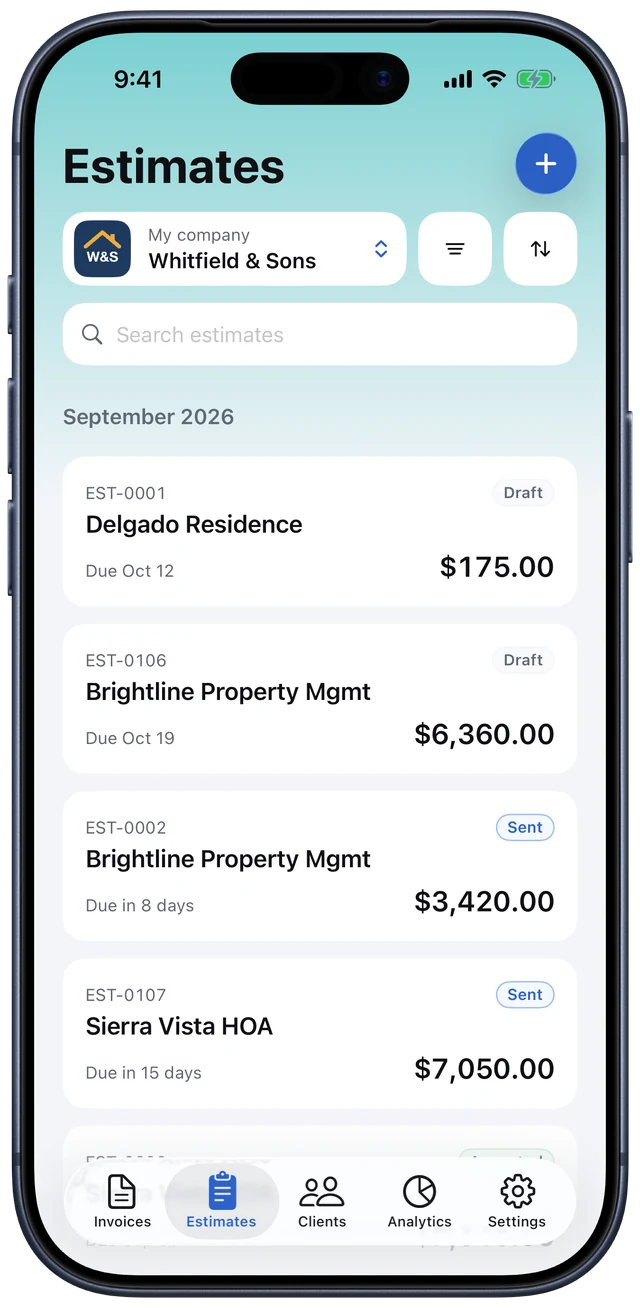
Yes. Estimates have their own numbering. When the customer accepts, mark the estimate Accepted and convert it: a new invoice opens with the client, line items, sections, VAT and payment details already filled in, and you save it.
Does it work without a signal?
Yes. Documents are written to the phone, so creating, editing, rendering the PDF and marking an invoice paid all work with no connection. You need a signal to email the file and to use Estimate with AI.

About this page
Invocket Editorial
Written by the team that builds Invocket, an invoicing app for contractors. We check prices and rules against published sources, name them on the page, and update the page when they change. How we write and check these pages.
Keep going
Template
Cleaning invoice template
Fill it in on the site or download it.
Template
Cleaning estimate template
Line items, deposit and expiry date laid out.
Free tool
Invoice generator
Make a PDF invoice in the browser.
Free tool
Job profit & margin calculator
See what the job leaves you after costs.
Free tool
Markup calculator
Free tool
Labor cost calculator
In the app
Estimate with AI
Academy
Estimates that win the job
Price the job first