In short
Invocket lets auto repair businesses write estimates on site, turn accepted ones into invoices, mark them paid and see who still owes what, all on the iPhone and without signal. Estimate with AI drafts the line items from a description.
On this page
What a auto repair job bills like
These are the lines a auto repair estimate usually carries. In Invocket each one is a line item with a quantity and a price, and you can group them into sections with their own subtotals:
- Labor, per book hour
- Parts, at cost plus markup
- Shop supplies
- Diagnostic fee
How auto repair jobs are priced and paid
Price labor by repair operation, often using labor-guide hours multiplied by your labor rate; this is not necessarily technician clock time. Quote diagnosis by time or as a stated fee when the fault is unknown. Price parts by part number and quantity. List fluids, shop supplies, towing, and outside machine work separately or explain the charge. Use the unit that fits the work and keep diagnosis distinct from repair labor.
Build the estimate around the vehicle, concern, findings, and operation, not a vague label like engine work. Identify parts as new, remanufactured, used, or customer-supplied where relevant, and name sublet work. An auto repair estimate template can help organize approval. Typical lines include:
| Line item | Priced by | What to write on the estimate |
|---|---|---|
| Diagnostic testing | Hour or stated fee | Symptom and tests included |
| Repair labor | Book hours per operation | Operation and labor hours |
| Replacement part | Part and quantity | Description, type, quantity |
| Fluids and filters | Quantity or item | Grade, quantity, filter |
| Shop supplies | Disclosed charge or items | What the charge covers |
| Machine or sublet work | Vendor job or item | Outside service and scope |
| Towing or storage | Trip, day, or stated fee | Service or dates covered |
For retail work, collect a deposit before ordering a special part or committing substantial parts cost, and credit it against the final balance. For a long repair, tie a progress payment to an agreed milestone, such as parts arrival or completed assembly. Collect the remainder when the vehicle is ready and provide an itemized invoice. For fleet or business customers, record the billing contact, purchase-order needs, submission method, and due terms on the repair order. Check your state and local rules for estimate, authorization, deposit, and payment requirements.
The documents a auto repair job produces


What makes billing auto repair work harder
Book hours and actual labor
Repairs may be quoted by labor-guide operation, while actual time varies with corrosion, access, and prior repairs. If the invoice only says labor, customers may compare it with technician clock time. Name each operation, labor basis, and included work on the estimate. Keep technician notes for complications and separate diagnostic time from repair labor when both are billed.
Diagnosis before a firm scope
A warning light or noise can have several causes, and testing may identify only a next step. Quote diagnosis separately, stating covered tests and whether repair labor is extra. Send findings and a priced estimate before replacement. Keep scan results, readings, and the customer’s response together so the final charge follows a documented decision and the customer can see what the diagnostic fee covered.
Parts, cores, and outside work
Parts may be unavailable, delayed, or different from the quote; jobs can also involve core charges, machine shops, or sublet alignment. Identify part type, expected core credit or charge, vendor work, and timing dependencies. If cost or part changes, revise the estimate and record approval before installation. Reconcile vendor charges and any core return on the final invoice so credits are not missed.
Dispute: final bill exceeds estimate
Customers may challenge added labor or parts after disassembly. Prevent this by writing the original scope, exclusions, diagnostic limit, and estimate total. If a new fault appears, pause, document it with notes or photos, send revised work and price, and record approval before continuing. At pickup, compare the original estimate, approved changes, and final invoice line by line to explain the difference. California’s Bureau of Automotive Repair requires a written estimate before work and the customer’s authorization before going beyond it; in Florida, the shop needs approval before exceeding the estimate by more than $10 or 10 percent, whichever is greater.
Dispute: repair did not fix the concern
A customer may say the same noise, warning light, or drivability problem remains. Before work, record the symptom and when it occurs; afterward, note the test drive, scan results, and repair. If it returns, inspect and document findings before promising a remedy or adding charges. Keep the original complaint, findings, approvals, and follow-up notes together to support a clear response.
Weather and driving patterns shape repair demand
Auto repair has no single nationwide busy season. Cold weather can bring no-start calls and battery, charging, or heating complaints; heat can expose cooling and air-conditioning problems. Travel periods may fill bays with inspections, tire work, and maintenance. Parts delays or a crowded shop push completion and pickup payment later. Track open orders and promised dates, and invoice when the work is complete. Local weather and driving patterns determine which services fill your schedule.
Auto repair invoicing FAQs
How do I quote an auto repair when I do not know the cause yet?
Quote an initial diagnostic step and list the tests it covers; say repairs and parts are excluded unless listed. After testing, share findings and a priced repair scope for approval. Keep the diagnostic charge visible even if the customer declines the repair recommendation.
Should auto repair labor be billed by book time or actual hours?
State the agreed basis before work. Many shops quote repair operations using labor-guide hours and a labor rate, while diagnostics may use time or a stated fee. Name the operation and included work. Some states set estimate rules for shops: Florida requires a written estimate to be offered on repairs over $150.
When should an auto repair shop collect a deposit?
A deposit can help before ordering a special component or committing substantial parts cost. Put its amount, purpose, and credit against the balance in writing. Explain cancellation and refund terms, and check your state and local rules before setting them.
How do I document approval for extra auto repair work?
Pause before work outside the approved scope. Describe the finding, added labor and parts, revised total, and timing change. Record the customer’s dated approval on a change order or repair order before continuing, and give the customer a copy.
What paperwork should I give a customer at vehicle pickup?
Provide an itemized final invoice matching the estimate and approved changes, with completed work, parts, fees, tax, credits, and balance. Record payment and issue a receipt. Include applicable warranty information and relevant diagnostic results or replaced-part details when agreed or required locally.
Does Invocket work for auto repair businesses of one?
Yes, it is built for them. There is no seat pricing, no crew scheduling and no account to create; the app opens straight into an empty ledger on your iPhone.
Can I send a auto repair estimate and turn it into an invoice?
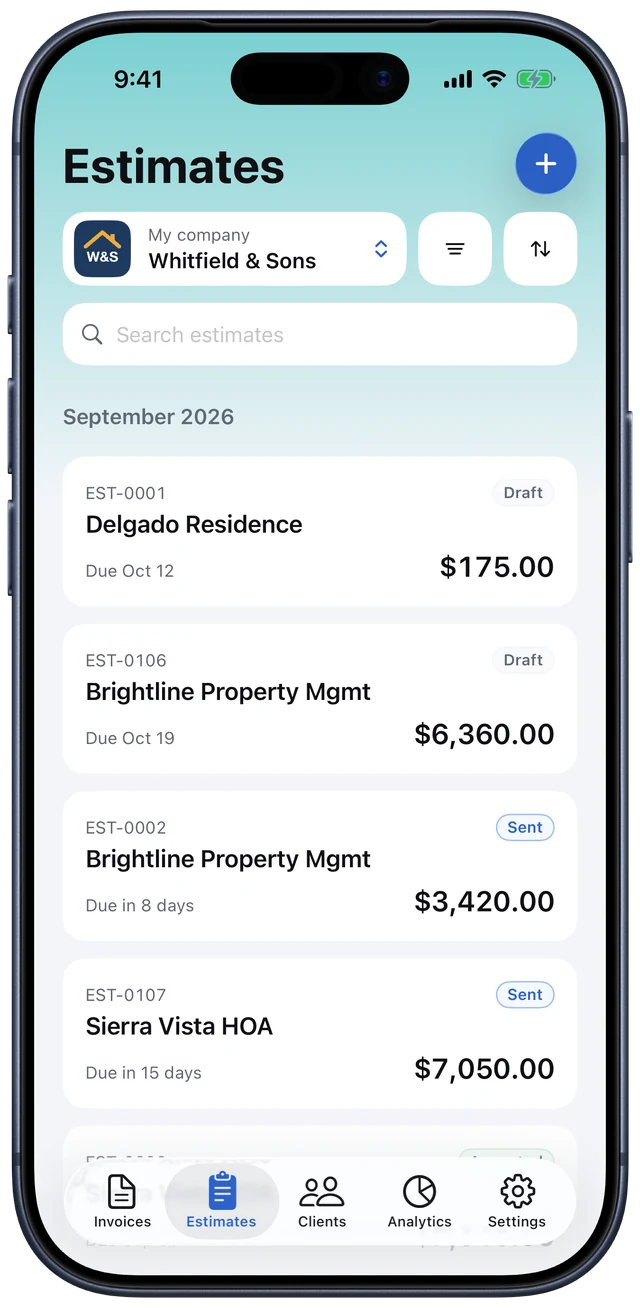
Yes. Estimates have their own numbering. When the customer accepts, mark the estimate Accepted and convert it: a new invoice opens with the client, line items, sections, VAT and payment details already filled in, and you save it.
Does it work without a signal?
Yes. Documents are written to the phone, so creating, editing, rendering the PDF and marking an invoice paid all work with no connection. You need a signal to email the file and to use Estimate with AI.

About this page
Invocket Editorial
Written by the team that builds Invocket, an invoicing app for contractors. We check prices and rules against published sources, name them on the page, and update the page when they change. How we write and check these pages.
Keep going
Template
Auto repair invoice template
Fill it in on the site or download it.
Template
Auto repair estimate template
Line items, deposit and expiry date laid out.
Free tool
Invoice generator
Make a PDF invoice in the browser.
Free tool
Job profit & margin calculator
See what the job leaves you after costs.
Free tool
Markup calculator
Free tool
Labor cost calculator
In the app
Estimate with AI
Academy
Estimates that win the job